
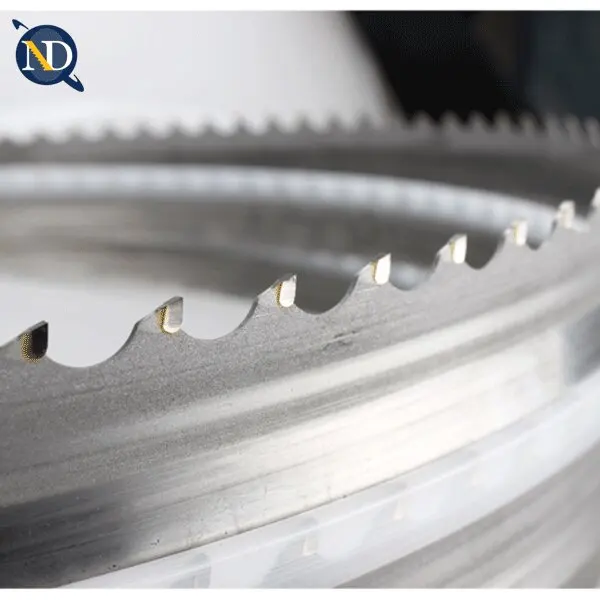
A bandsaw is a great tool for cutting metal. Yet, like any tool, the bandsaw blades can get dull. If you would like tips on how to get more life out of your bandsaw blade, check out the following simple suggestions. Tools You won't get anything done if your gear is broke. By taking the advice of these tips, you will be able to save your time and money in your metal cutting projects. We will get into the recommended tips for increasing the life of your bandsaw blades and what factors can shorten or extend its use time.
What Are the Optimal Ways to Extend Bandsaw Blade Life?
To ensure that your bandsaw blade performs well, begin by selecting the proper blade for the job. Blades are made for different types of metal. For example, some are designed for use with soft metals like aluminum, while others cut through harder materials like steel most effectively. It’s nice to know what you’re cutting before you begin. And don’t forget to keep the blade sharp. A blade that has dulled can cause the machine to work harder and wear faster. Inspecting and changing blades when they grow dull will help to save time and efforts. And a very crucial key is the tension that you need to set on the blade. If the tension is too slack, the blade might slip off and bend. If too tight, it can snap. It’s finding the right balance that’s important. And the speed at which you cut counts, too. Cutting too quickly can heat the blade and cause it to dull rapidly. Slow and steady is usually best. Don’t forget to use cutting fluid! This will help cool the blade and cut down on friction as you slice, which creates less wear and tear. Cleaning the bandsaw is important as well. Dust and metal shavings are less likely to present a problem when they accumulate. The saw cuts smoothly if it is clean and shiny. Lastly, just be sure to read your bandsaw owner’s manual. The manufacturer of your specific saw might offer further advice based on how it has tailored its product.
What are They Key Factors Affecting the Bandsaw Blade Life for Metal Cutting?
There are a lot of variables and factors involved with how long a bandsaw blade will last. A major factor is the metal you’re cutting. The blades of softer metals can tear harder ones apart, the way cardboard makes a meal of scissors. There’s also the matter of material thickness. While stronger materials may need the added pressure, they can also make it easier for the blade to wear out more quickly. The way you have your bandsaw set up can make a difference as well. If the blade isn't straightened, then it's going to contribute uneven wear. The blade quality itself matters as well. Blades crafted with good material, last longer. The shape of the blade, including number of teeth per inch, determines how it cuts and how fast it wears out. Increasing the number of teeth can provide a smoother cut but also can lead to faster wear than blades with fewer teeth. And also depending on environmental factors like humidity and temperature those things could change the effectiveness of a blade. Too much heat and the blade can get too hot, wearing out quickly. If it’s too cold, it can become fragile and shatter. So, watching for these conditions can make it easier to maintain the life of your blade. Finally, the cyclic operator is critical. If you treat the bandsaw poorly, use it inappropriately, or otherwise don’t treat your blades well, they will wear out much more quickly. Other Considerations Anyone using the bandsaw will benefit from training and awareness. If you keep these in mind, they can help you to maximise the life from your bandsaw blades when cutting metal.
How to Take Care of Bandsaw Blades for Their Long Life
Caring for your bandsaw blades is significant if you want them to serve you for a longer period. Bandsaw blades, just like any other tools we use require cleaning and care otherwise expect to spend a lot of money on replacement band saw's or your. First and foremost, you always want to ensure your blades are clean. Cutting metal can cause particles of the metal to adhere to the blade. And that can wear the blade down more quickly. To clean it, you can simply use a soft brush or cloth to remove any metal shavings. Don’t forget to do this each time you use it. The next thing is to feel the blade's tension. An overly tight or loose blade can snap at any time. It’s like when you pull a rubber band out too far, it can snap! The tension of your bandsaw will need to be set according to the uncomplicated procedure given by your bandsaw manual.
Another critical maintenance step to perform is blade alignment. If the blade isn’t straight, it can wear unevenly. The alignment may be corrected by the bandsaw manual. It’s also wise to periodically inspect the guides and bearings. These are the parts that make sure the blade stays in place and runs smoothly. Dull ones can determine how much your blade will cut. You can change these parts as needed. Finally, always keep your bandsaw blades in good storage condition. Store them in a cool, dry place when not in use. This will help keep rust and other damage at bay. Simply by following these easy steps, you can extend your metal bandsaw blade life cycle and make more out of your metal cutting work. At SWEAT, we think good maintenance is what keeps your tools working their best.
What Are the Must-Have Features for Wholesale Bandsaw Blades?
So when buying bandsaw blades on large quantity there are certain things that you should look out for. First, consider what the blade is made of. The most common bandsaw blades are constructed in either HSS or carbide. High-speed steel blades are okay for most cutting, while carbide blades work best on harder metals. Understanding what material you should have is a key component to the type of work that you are doing. Tooth Design Another thing you need to consider while choosing bandsaw blades for metal, is the teeth design. The teeth of the blade can also be different shapes and sizes. The teeth of some blades are further apart while others’ have closely spaced ones. If you have one with ample space between, it’s good for cutting thicker material, and something where the teeth are close together is good for fine cuts,” he said.
Also, take into account the width of the blade. The wider the blade, the stiffer it is and better suited to cutting straight lines; a narrower blade will take tighter curves. You also need to consider the type of cuts you would want to make before making a choice. The teeth per inch (TPI) is also a consideration. The higher the TPI of a blade, the better it is at cutting thin materials, and vice versa. Finally, attend to any special coatings on the blades. Some blades are equipped with coatings that cut down on friction and make them last longer. When purchasing in bulk, read reviews or get recommendations to find good-quality blades. SWEAT carries all sizes of bandsaw blades to satisfy these important requirements, which will facilitate your metal cutting applications.
When it comes to selecting a band saw blade for cutting metal we have covered some of the basics: Most bi-metal bandsaw will last longer and cut faster.
Selecting the right Bandsaw Blade is very important, and it’s anything but simple. What are you Cutting? First, know what kind of metal you’ll be cutting. Various metals have varying degrees of hardness. Use a lower teeth per inch (TPI) blade for softer metals, like aluminum. This makes it easier for the blade to cut faster and better. For harder metals such as steel, you will want a blade of higher TPI. This results in cleaner cuts and there is a lower risk of damage to the blade.
Then think about the thickness of metal you plan to cut. When you’re cutting thick metal, a wider blade is required. A wider blade will be stronger and better able to cope with the pressure of cutting through thicker materials. If you’re cutting thin metal, a narrower blade will work best because it can make tighter turns. It’s also worth considering the type of cut you need. A blade with a more-rigid construction will help you make straight cuts, if that’s what you’re after; the stiffness goes far in keeping your cut accurate. More flexible blade is preferred for curves and complex design.
Lastly, check out the speed of your band saw. Certain blades are more effective at other speeds. Be sure to pair those blades with the proper speed for optimal cuts. Here at SWEAT, we have access to bandsaw blades for cutting all types of metal. This means you can select the correct blade to make your cutting jobs easier and more efficient by simply knowing your metal type, thickness and cutting profile to ensure that a bandsaw blade of the right teeth per inch and size with a suitable edge is selected.